Rail accident investigation ·
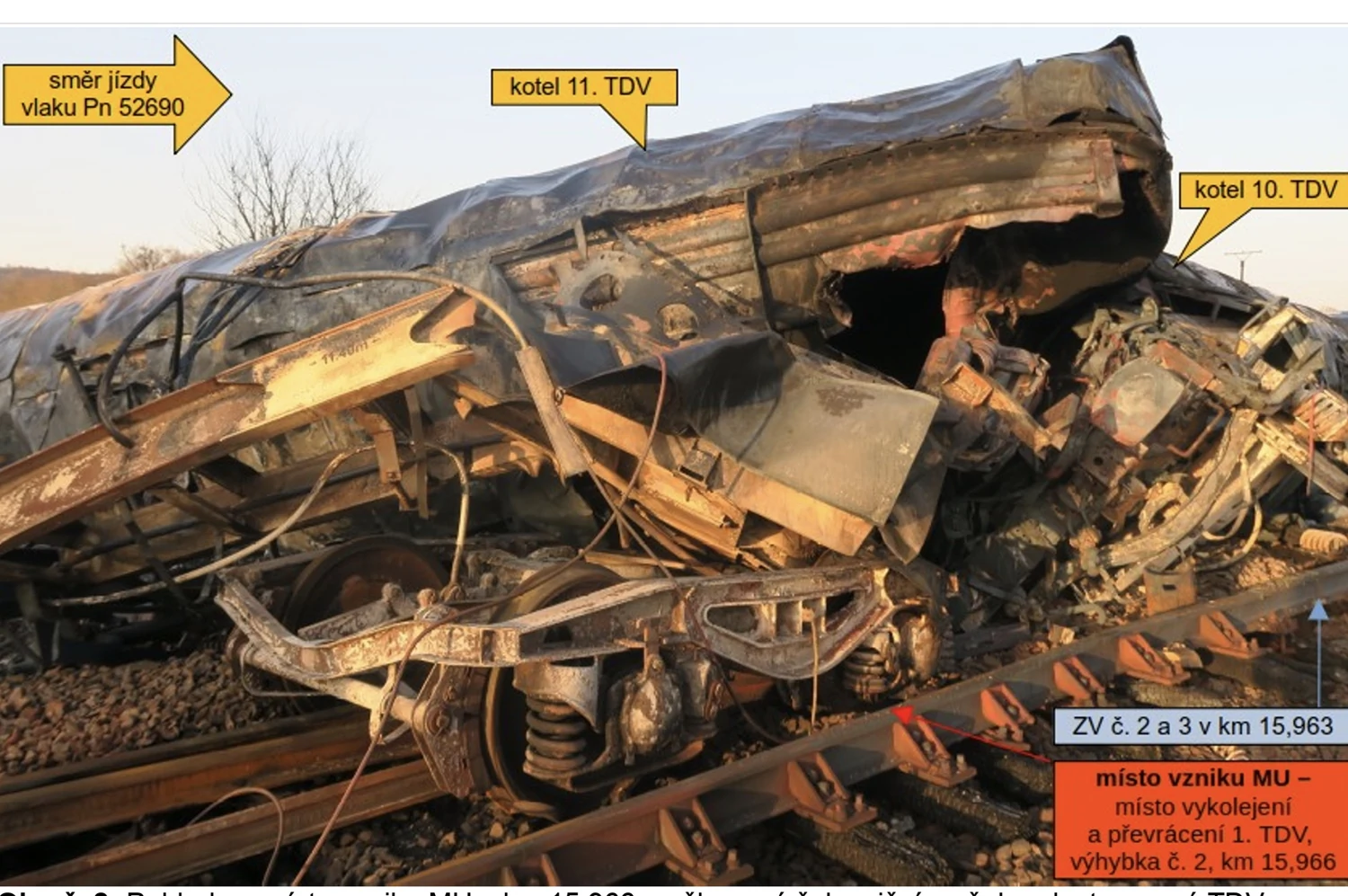
A train carrying more than 1,000 tonnes of benzene derailed at 93.5 km/h on a turnout with a 40 km/h speed limit
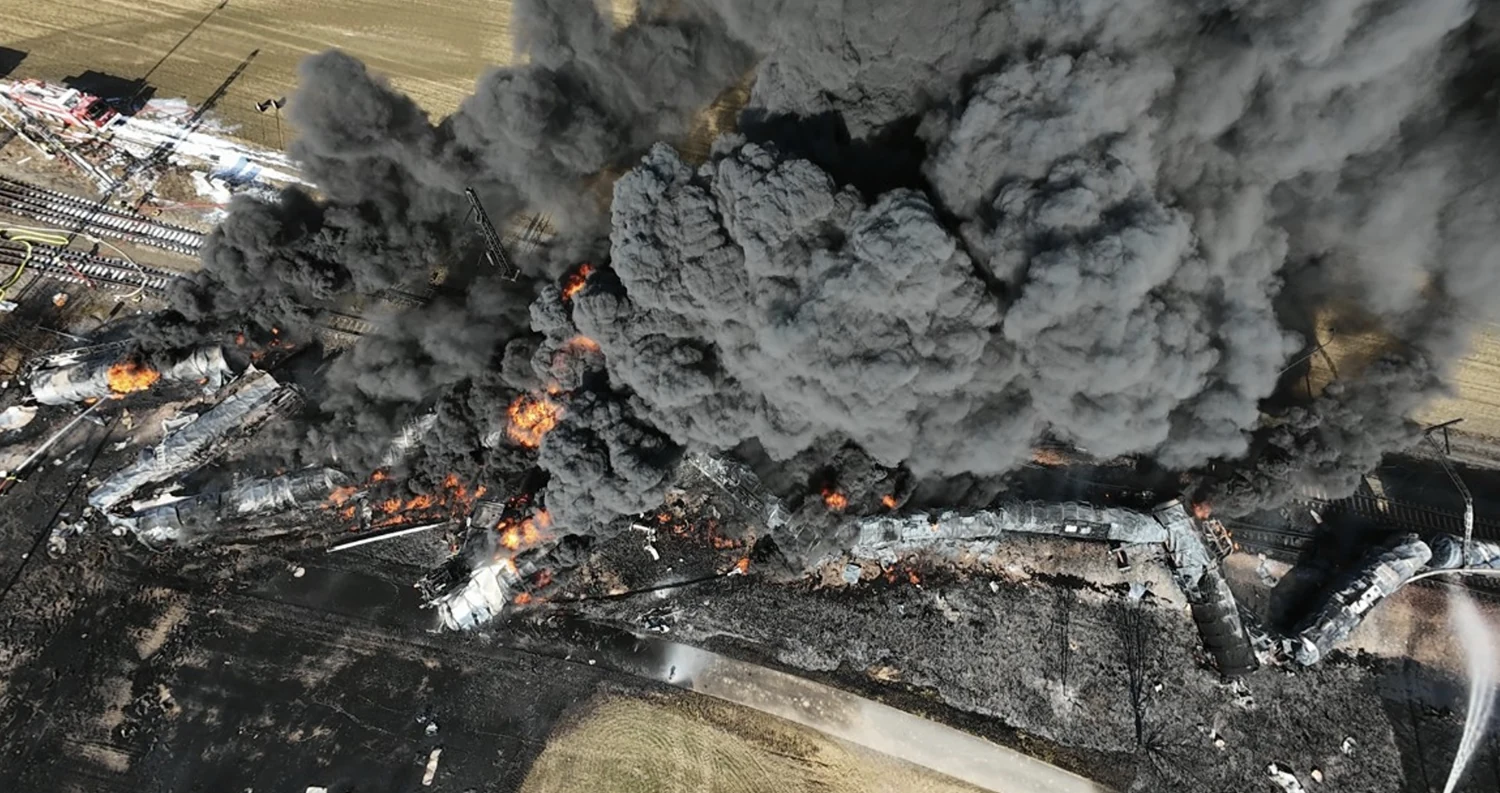
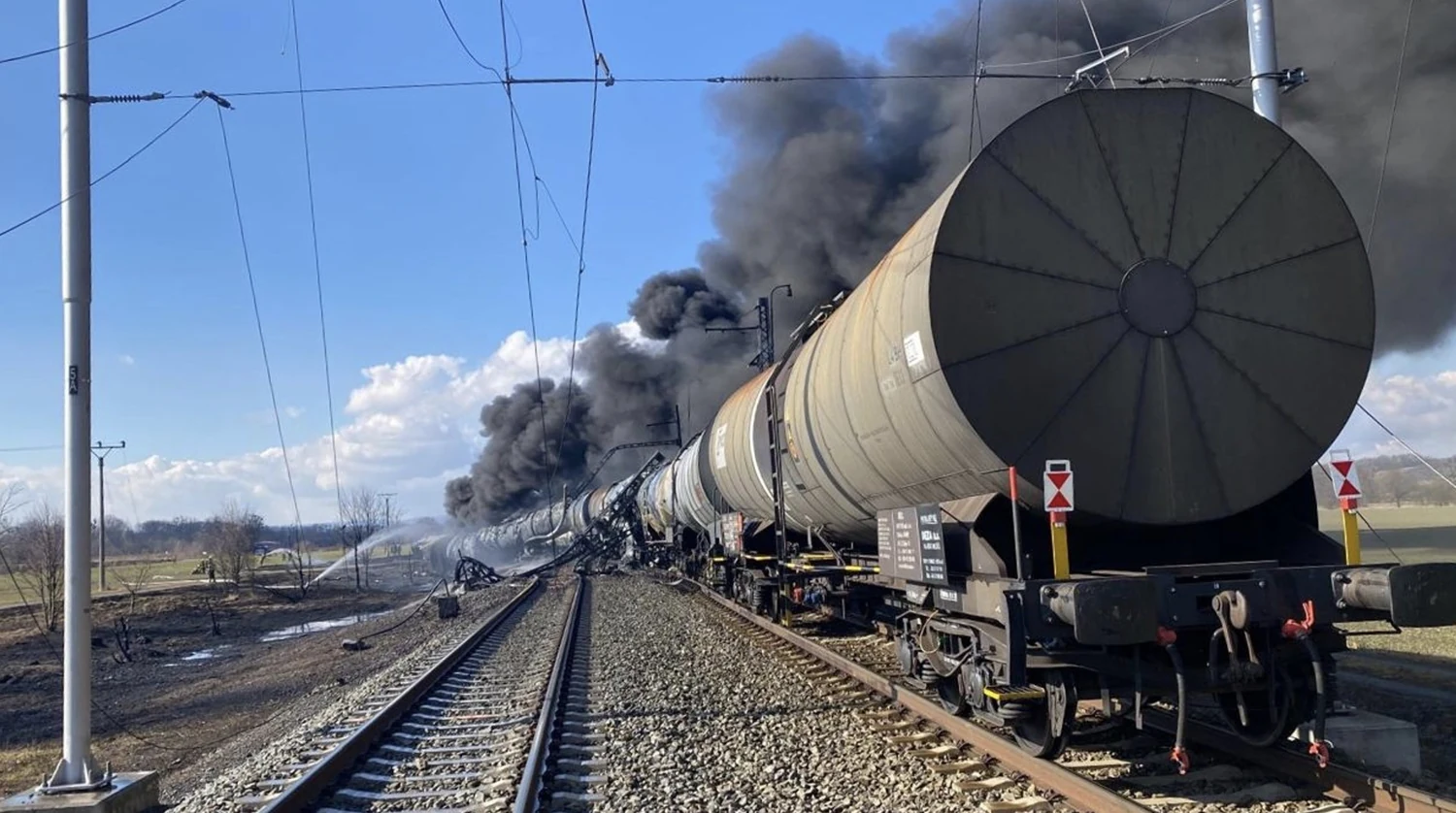
On 28 February 2025, a freight train carrying benzene (UN 1114) in 17 tank wagons derailed at Hustopeče nad Bečvou station in Czechia. The fire affected 15 wagons. No one was killed or injured, but an estimated 260 tonnes of benzene seeped into the ground. It took almost nine months for rail services to return to normal.
Arturo García Cobaleda · Dangerous Goods Safety Adviser
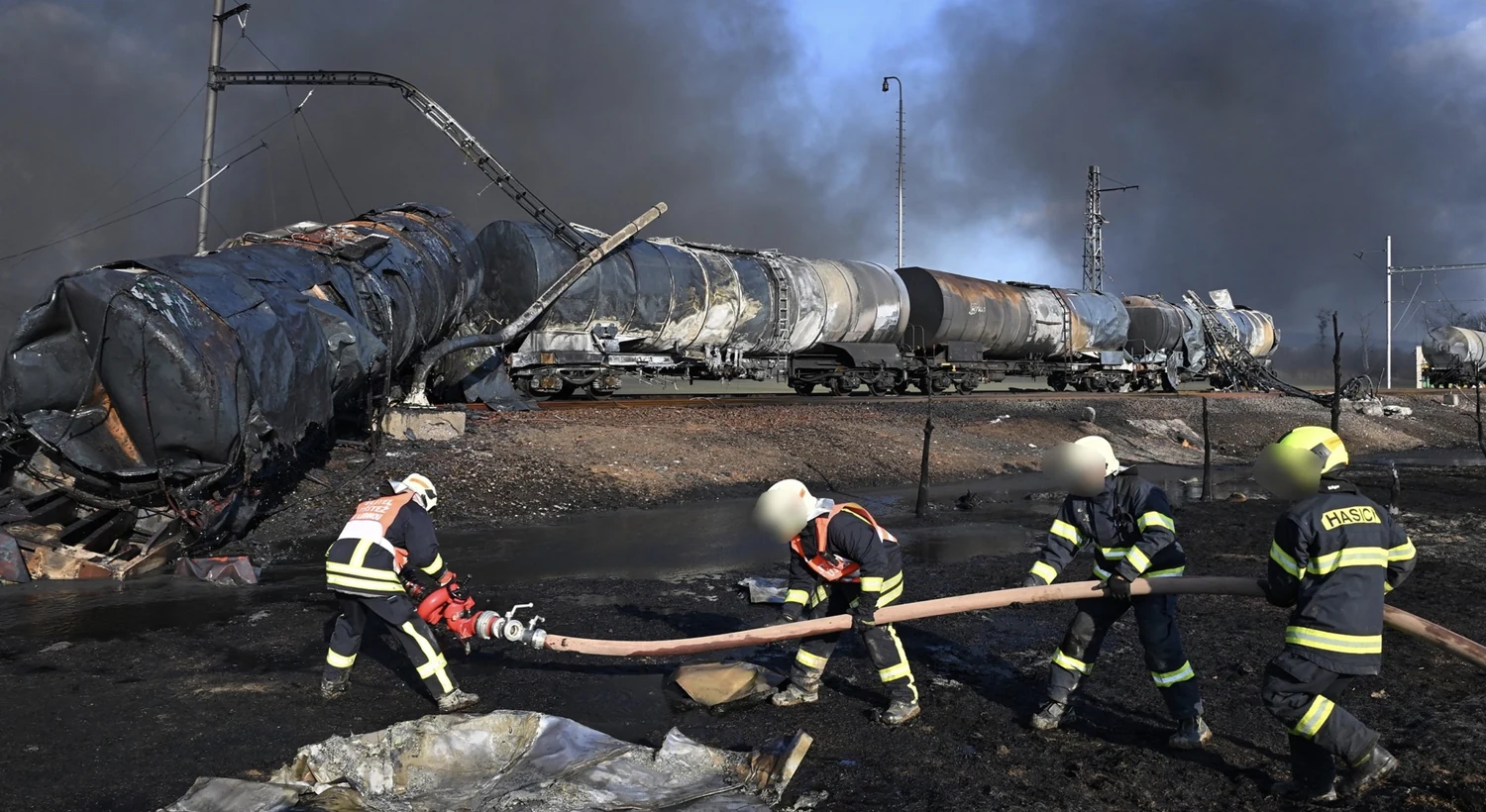
How did the train reach the turnout at more than twice the permitted speed?
According to the Czech Rail Safety Inspection Office, the driver and the instructor expected to continue straight ahead, as they usually did. They confirmed that assumption with each other without checking what the signals actually showed. The first signal gave advance warning of the 40 km/h restriction, and the station entry signal confirmed it. Braking only began once the train had reached the first turnout.
RID checks before departure
As a Dangerous Goods Safety Adviser, I would also draw attention to what happened before departure. The company acting as consignor and filler used approved tank wagons, observed the filling limits and correctly marked and placarded the wagons. The carrier checked that the tank inspections were still valid but omitted the visual check required under RID 1.4.2.2.1(c) for visible defects, leaks, cracks or missing equipment.
The investigation found that this omission played no part in the derailment. For those of us who audit these operations, the case raises a practical question: when the carrier takes over the wagons, who walks the train to check them before departure, and how is that check recorded?
Photographs and technical drawing from the investigation
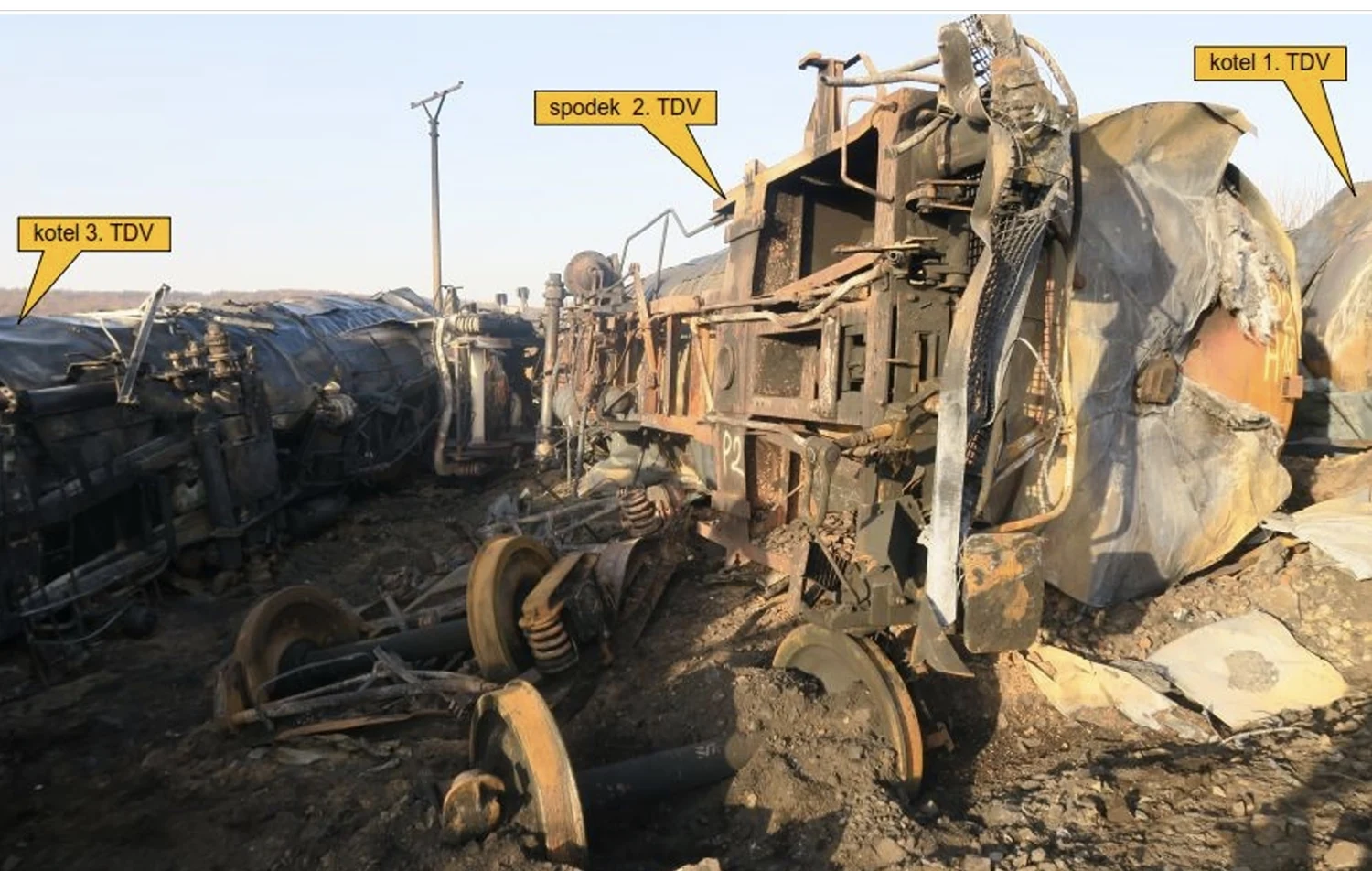
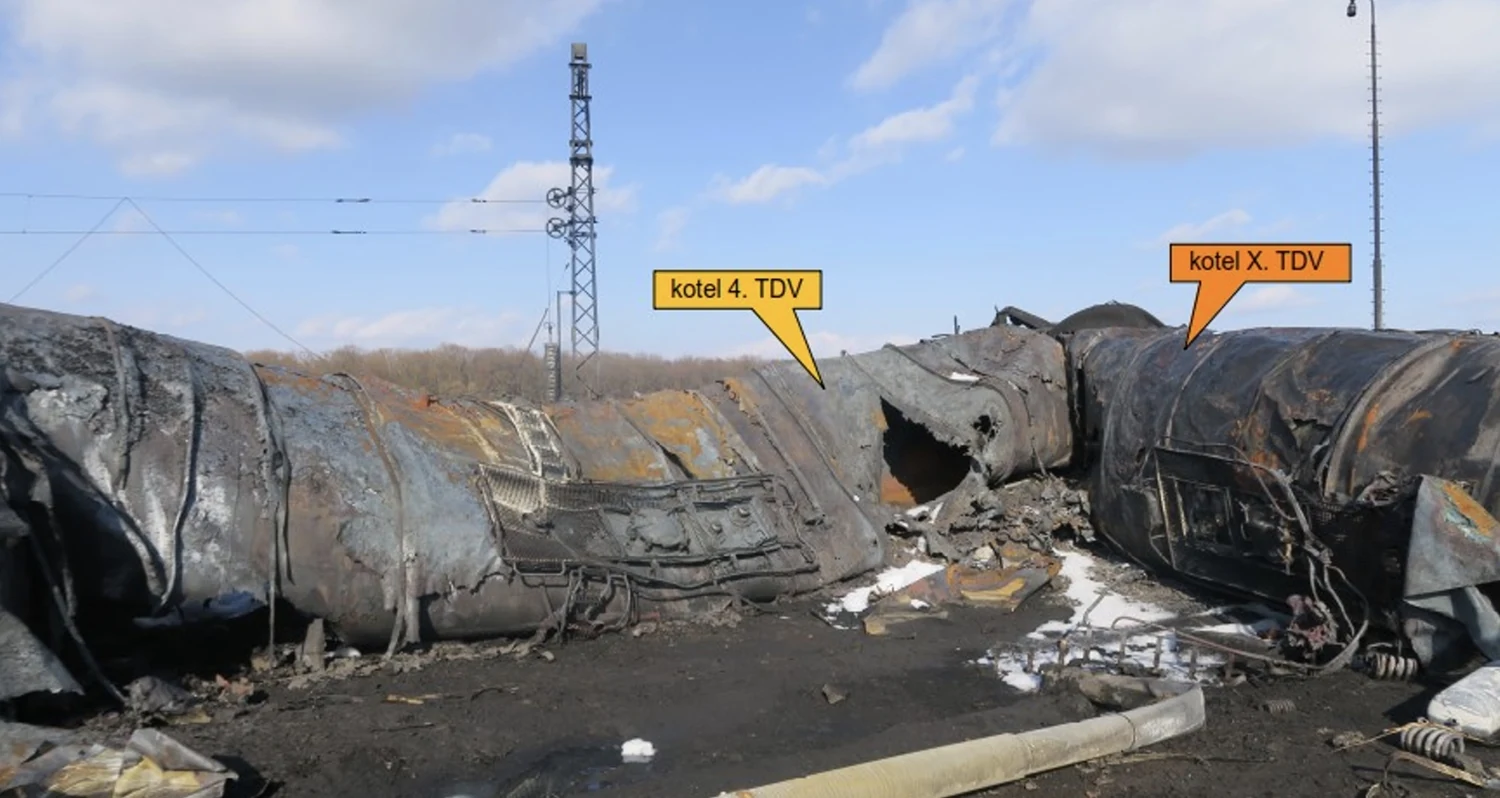
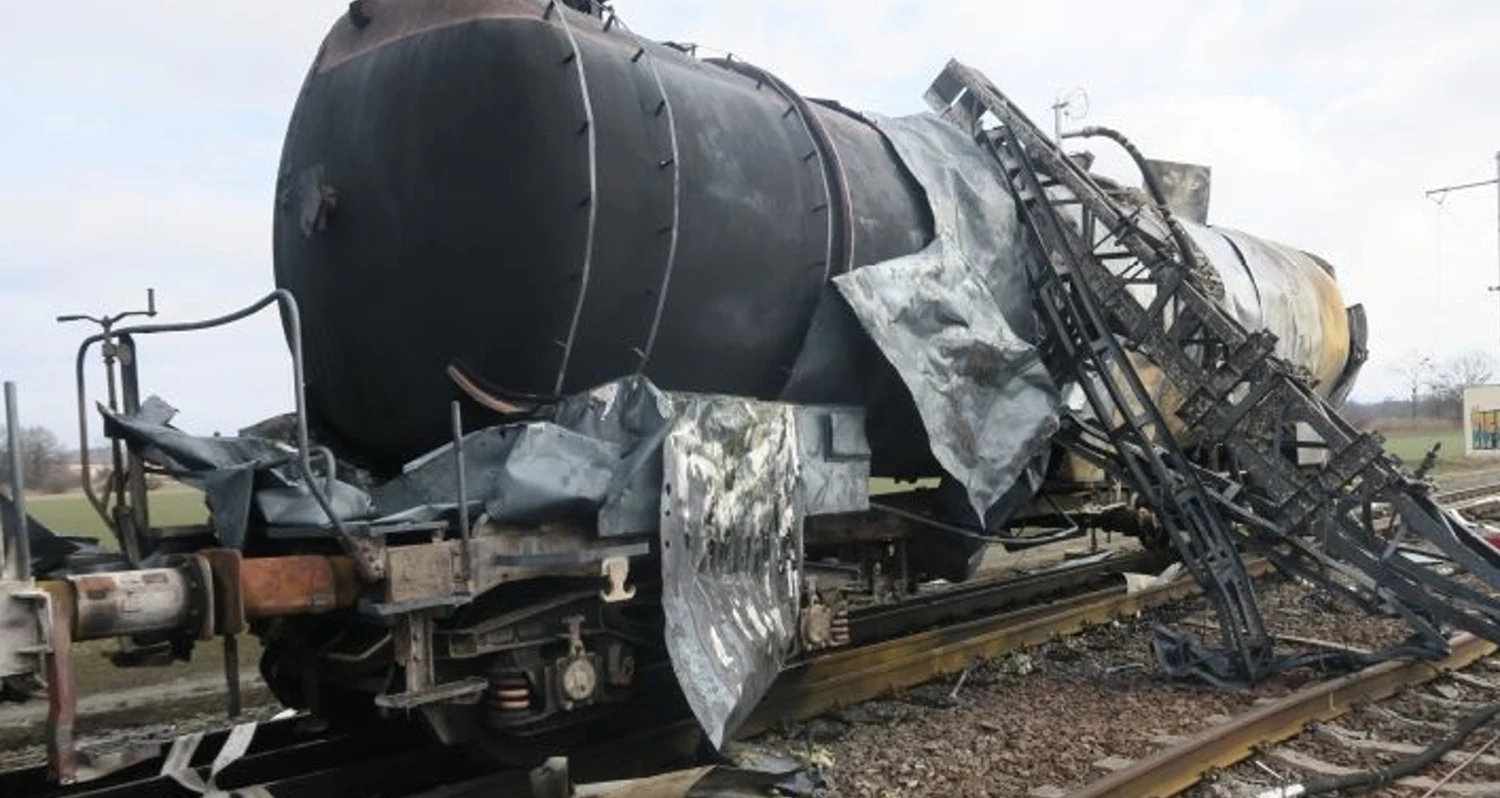
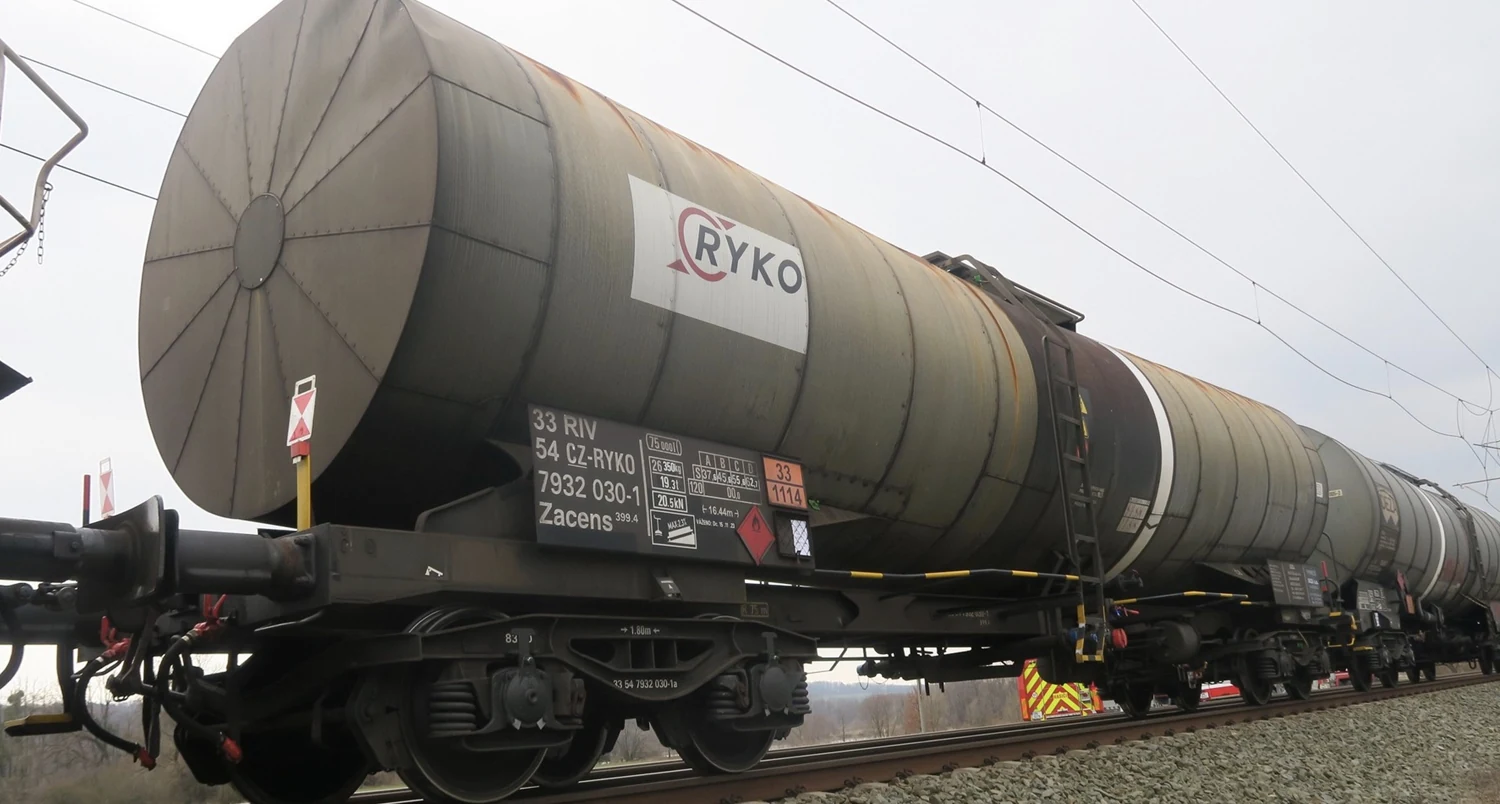
Official source
Final report by the Czech Rail Safety Inspection Office, 13 August 2026 (PDF)
Read this case on DGSA.es →